Why a Day at Home Still Needs an Outfit With a Front Door Option

Quick Answer: The problem with pure loungewear is not how it looks — it is that it has no exit route, so every unplanned departure costs a decision and a change. Build home outfits around a presentable base (fitted top, structured bottom) plus one throw-on layer and shoes by the door. That makes leaving a ten-second operation instead of a ten-minute one, and it changes how the whole day feels.
You were not going anywhere.
Then you needed to, three times.
Each one cost a change of clothes you had not planned for.
Why does what you wear at home matter at all?
Because clothing does more than one job, even indoors.
It signals the register of the day to you. Getting dressed marks a transition from sleep to day. Skipping it leaves the boundary blurred, and people consistently report the day feeling less defined.
It determines how easily you can leave. This is the practical one. If leaving requires a full change, small errands get postponed or skipped entirely.
It affects how you answer the door. A knock at 11am should not be a crisis. Being able to open the door without thought is worth designing for.
It changes how you sit and move. Genuinely soft clothing encourages settling; structured clothing keeps you slightly more upright and active. Neither is better — but they produce different days.
Video calls have made it partly non-negotiable anyway. Most home days now contain at least one moment of being seen.
And there is a real cost to the decision itself. Ten minutes of deciding whether an outfit can leave the house, several times a day, is a genuine tax on an otherwise unstructured day.
What makes an outfit work both ways?
Six characteristics that let one outfit cover both sides.
A structured bottom half. Wide-leg knit trousers, a straight-leg jersey trouser, or a heavyweight legging. Anything with a defined shape reads as clothing; drawstring pyjama bottoms do not.
A fitted rather than oversized top as the base. An oversized sweatshirt over relaxed trousers reads as loungewear because both halves are loose. Fitted on top plus relaxed below reads as an outfit.
One throw-on layer within reach. A cardigan, shacket or overshirt kept by the door. This is the single item that does the converting, and its location matters as much as the item itself.
Real shoes accessible. Not up two flights of stairs. Loafers, clean trainers or ankle boots by the door make leaving a ten-second decision.
Fabric that does not look like sleepwear. Ribbed knit, jersey, heavyweight cotton and merino all read as clothes. Brushed fleece, satin and anything with piping does not.
Colour cohesion. Two or three colours that work together. A tonal outfit looks considered even when it is entirely comfortable — this is most of what separates the two categories.
Seasonal note: the transitional season makes this easier rather than harder. Knit trousers, a fine-knit top and a shacket is genuinely comfortable at home and completely unremarkable outside, which is not true of either high-summer or deep-winter home clothing.

What does this look like in practice?
Five specific combinations, all comfortable enough for a full day in.
Wide-leg knit trousers, fitted long-sleeve, cardigan by the door. The default. Comfortable indoors, and the cardigan plus loafers makes it a legitimate outfit.
Heavyweight leggings, longline top, shacket. More active-leaning. Good for a day that includes a walk or a workout, and the longline top removes any question about the leggings.
Jersey trousers, plain tee, oversized knit. The knit is the converting layer, and the tonal version of this reads as deliberate rather than convenient.
A knit dress with tights or leggings. One item, zero decisions, entirely comfortable, and it is already an outfit. The most efficient option there is.
Straight-leg jeans with a soft top. For anyone who finds structure helps them focus. Less comfortable for lying on a sofa, considerably better for getting things done.
Three quick questions people ask here
Is it worth changing if I am definitely not leaving? Getting dressed still marks the day’s start. Whether it needs to be door-ready depends on how reliable definitely is.
What about pyjamas all day occasionally? Entirely fine as a deliberate choice. The problem is only when it is a default that later costs you.
Where should the throw-on layer live? By the door, not in the wardrobe. Location is what makes it get used.
What Nobody Tells You About Dressing for Days at Home
The bottom half decides everything. People focus on the top because of video calls, but the trousers are what determine whether you can answer the door or walk to the shop. Get those right and the rest is easy.
Shoes by the door do more than any garment. Having real shoes accessible removes the largest single barrier to leaving the house on an unplanned errand.
Comfortable and presentable stopped being a trade-off. Knit trousers, jersey tailoring and heavyweight leggings did not exist in this form fifteen years ago. The old assumption that you had to choose is simply out of date.
A tonal outfit looks considered with no additional effort. Two or three colours in the same family is the whole trick, and it costs nothing.
Getting dressed changes what you get done. Not because of discipline, but because the friction of leaving, answering the door and starting things drops.
And the one people notice immediately: the ten minutes you spend deciding whether an outfit can leave the house, several times a day, is more disruptive than the clothes themselves. Removing the decision is the actual benefit.
FAQ: Home Outfit Questions, Answered
Does it really matter what I wear at home?
Mainly for practical reasons — being able to leave, answer the door and take a call without changing. The psychological side is real but secondary.
What is the single most useful item?
Wide-leg knit trousers. As comfortable as loungewear, reads entirely as clothing.
How do I avoid looking like I am in pyjamas?
Structured bottom half, fitted top, and fabric that is not brushed fleece or satin. Those three cover most of it.
Where should I keep the throw-on layer?
By the door. A cardigan in the wardrobe upstairs does not get used.
Is a knit dress a good option?
The most efficient one on the list. One item, no decisions, already an outfit.
What about actual pyjamas all day?
Fine as a deliberate choice. The issue is only when it is a default that costs you every time something unplanned comes up.
What works best for the transitional season?
Knit trousers, a fine-knit top and a shacket. Comfortable indoors, unremarkable outdoors, and it handles a cool morning and a warm afternoon.
TL;DR:
- Pure loungewear has no exit route — every unplanned departure costs a change and a decision.
- Build from a structured bottom half and a fitted top; two loose halves is what reads as pyjamas.
- Keep one throw-on layer and real shoes by the door. Location matters as much as the item.
- A tonal palette makes a comfortable outfit look considered for free.
- A knit dress is the most efficient version: one item, zero decisions.
Put a cardigan and a pair of loafers by your front door this week. That is the entire system.
See It in Motion
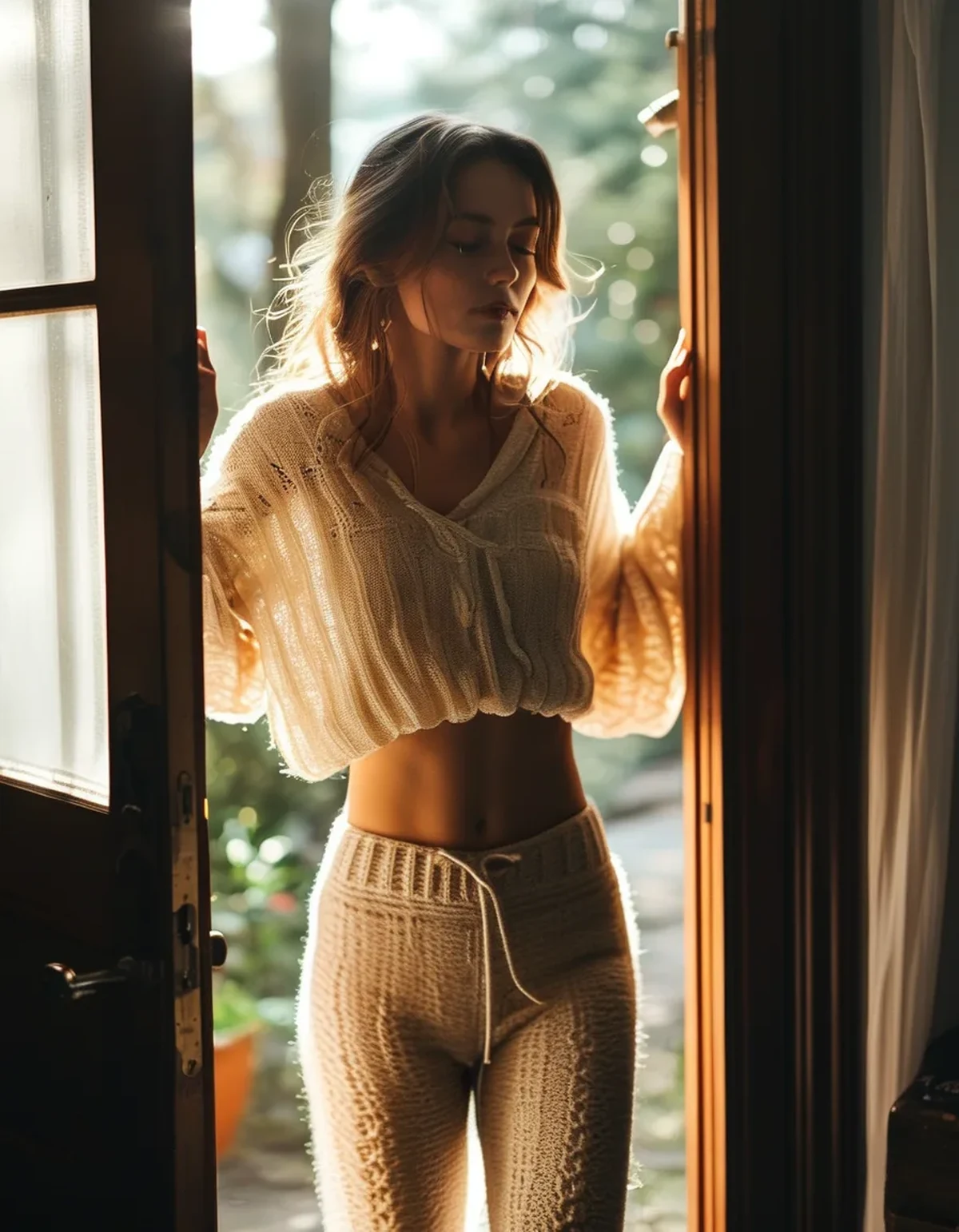
Seen here: High Waist Drawstring Wide Leg Yoga Pants with Pockets — shop it on bubblelime.com
Keep Reading
This article is for general informational and styling purposes only. Fit, sizing, and product availability may vary.