Does What You Wear at Home Actually Affect How Productive You Feel During a Staycation?
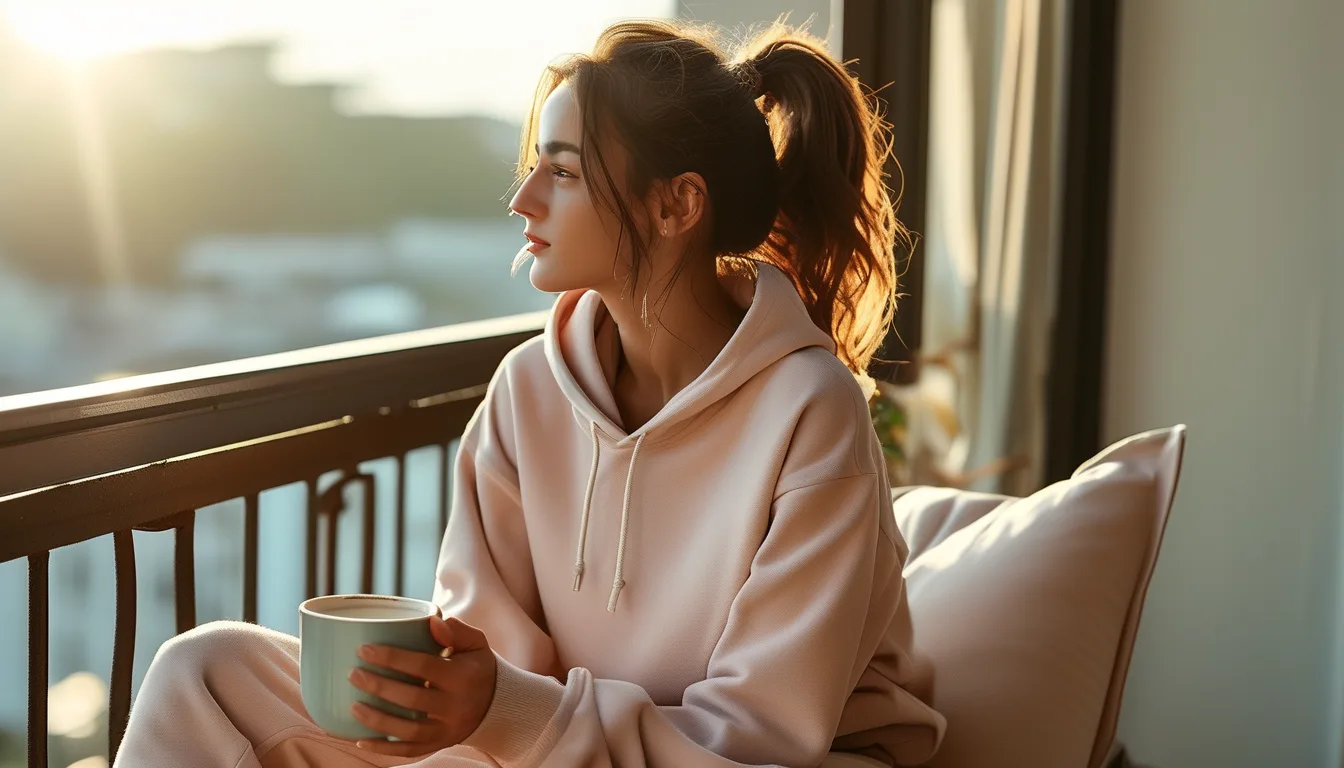
Quick Answer: Yes, there’s real psychological research (sometimes called enclothed cognition) showing that clothing choice measurably affects mood, focus, and self-perceived competence — staying in sleep-associated pajamas all day tends to reinforce a low-energy, low-focus mental state, while even simple, comfortable ‘day’ clothing supports a more alert, purposeful mindset during a staycation.

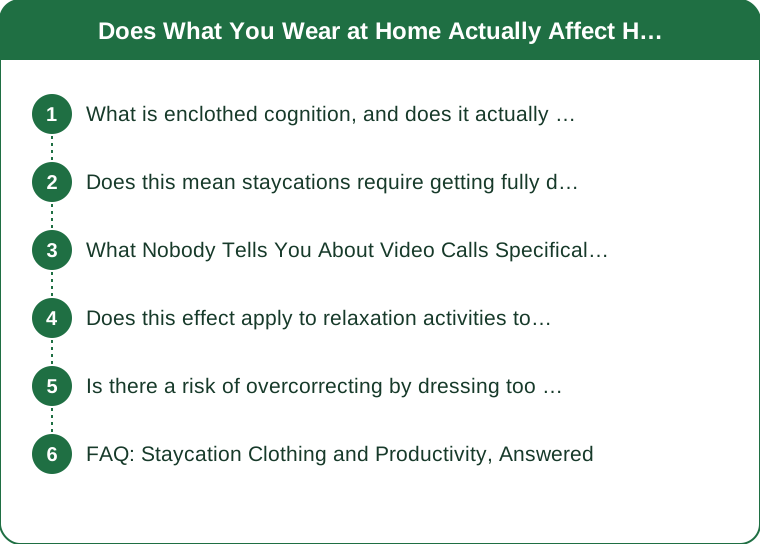
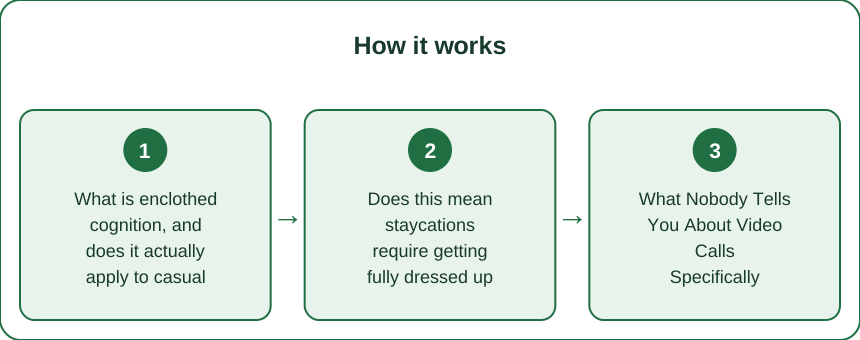
What is enclothed cognition, and does it actually apply to casual home clothing?
Enclothed cognition research shows that the symbolic meaning we associate with an item of clothing influences our cognitive state and behavior while wearing it — the effect was first studied with formal wear like lab coats, but the underlying principle extends to casual clothing too: pajamas carry strong symbolic association with sleep and rest, and wearing them during active daytime hours can reinforce that low-energy mental association even during a staycation.
Does this mean staycations require getting fully dressed up to be enjoyable?
No — the research doesn’t suggest formal dress is necessary, just a clothing change that symbolically marks the transition from sleep to an active, chosen state of rest or activity — comfortable daywear that isn’t literally sleepwear (a soft t-shirt and joggers, for example) can provide much of this psychological benefit without requiring anything close to formal or restrictive clothing.
What Nobody Tells You About Video Calls Specifically Amplifying This Effect
For any staycation day involving video calls, the mismatch between feeling clearly ‘off duty’ in pajamas and needing to appear present and engaged on camera creates a specific kind of internal friction — many people report feeling less mentally present and more distracted during video calls taken in full pajamas compared to the same call taken in simple daywear, even when physically nothing else about the setup changes.

Does this effect apply to relaxation activities too, or just productivity?
The effect isn’t purely about productivity — it also applies to how fully people report enjoying deliberately restful activities, since a small clothing change that marks ‘this is my chosen staycation time’ rather than ‘I never got out of sleep mode’ can make intentional rest feel more like an active choice and less like passive inertia, which some people find changes how satisfying the rest actually feels.
Is there a risk of overcorrecting by dressing too formally for a relaxing day at home?
Yes — overly structured or restrictive clothing can undermine the comfort that makes a staycation appealing in the first place, so the useful adjustment is a middle-ground choice (comfortable but not literally sleepwear) rather than swinging to fully polished daily outfits that reintroduce the discomfort a staycation is meant to avoid.
FAQ: Staycation Clothing and Productivity, Answered
Does this research apply equally to everyone, or do some people not experience this effect?
Individual variation exists — some people report minimal effect from clothing changes, though the average effect across studies is measurable enough to be worth testing for yourself even if you’re skeptical.
Is there a specific type of clothing shown to work best for this effect?
No single ‘best’ item — the key factor is that the clothing symbolically differs from sleep-associated pajamas, so the specific style matters less than the simple act of changing into something associated with waking, active time.
Does this mean loungewear brands marketing ‘elevated’ pieces have a real point?
There’s a reasonable psychological basis behind marketing that distinguishes ‘elevated loungewear’ from pure sleepwear, even if the marketing language itself is promotional rather than scientific.
TL;DR:
- Enclothed cognition research shows clothing choice measurably affects mood and mental state
- Staying in literal pajamas all day can reinforce a low-energy, rest-mode mindset even during active hours
- Video calls specifically amplify the mismatch between pajama comfort and needing to feel present
- A middle-ground choice — comfortable but not literal sleepwear — captures the benefit without losing ease
It’s a small, low-effort adjustment with real psychological backing, not just superficial style advice.
Keep Reading
This article is for general informational and styling purposes only. Fit, sizing, and product availability may vary.